12 Signs a Car Was in an Accident (and What the VIN Shows)
Half of all salvage cars were hit in the front, which is the part a quick look misses. Twelve things to check in person, and what the VIN adds.
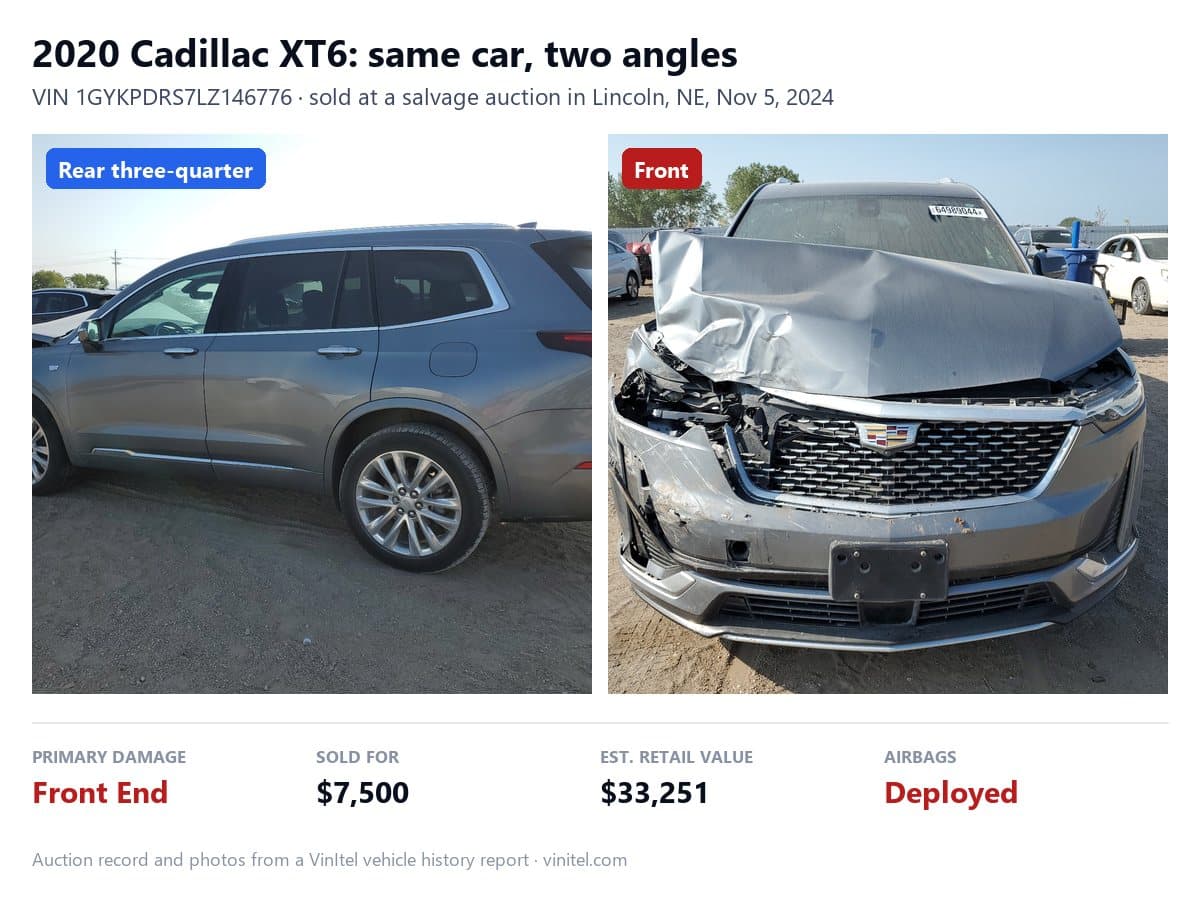
Look at the left photo below. It's a 2020 Cadillac XT6 Premium Luxury with 50,279 miles, and from that angle there is nothing wrong with it. The right photo is the same car from the front. The hood is folded, the grille is pushed in and inside, the airbags have gone off. It sold at a salvage auction in Lincoln, Nebraska on November 5, 2024 for $7,500. Its retail value was $33,251.
Once a car like this is repaired, you won't see the crash from any angle. You'll see small things: a gap, a bolt, a date on a piece of glass. Here's what to look for, and how the VIN fills in what the eye can't.
Where cars get hit
We grouped 7.57 million salvage auction sales from January 2020 to January 2025 by the primary damage the auction recorded. Front end damage was more than half of everything.
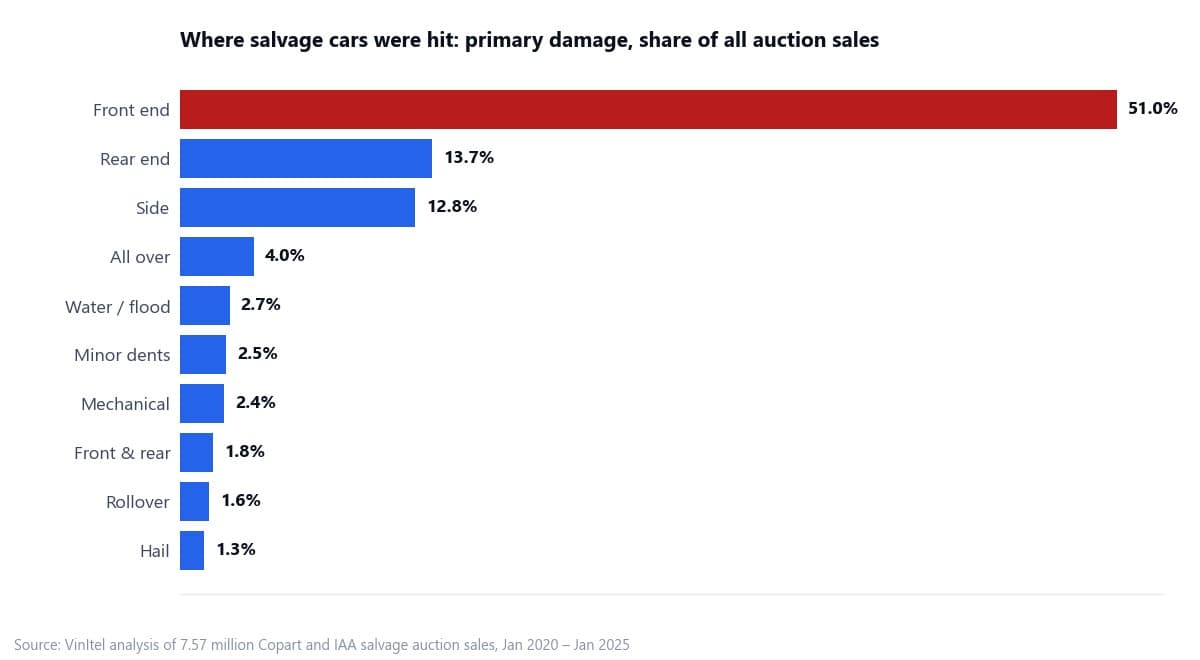
That matters for how you inspect. Most buyers walk around a car and look at the sides. Spend most of your time on the front: under the hood, behind the bumper and at the seams around the headlights.
12 signs a car has been in an accident
Outside
- Uneven panel gaps. Compare the gap between hood and fender on both sides, and around each door. Factory gaps are even. A gap that's wider at one end means a panel was refit.
- Paint that doesn't match. Look along the car in daylight from a low angle. A panel that's slightly different in color or shine, or has an orange-peel texture, was repainted.
- Overspray. Paint on rubber seals, on black plastic trim, on the edge of the glass or under the hood is a sign of body work.
- Tool marks on bolts. Open the hood and look at the bolts that hold the fenders and the radiator support. Scratched paint or wrench marks mean they've been off.
- Glass with different dates. Every window has a small stamp with the maker and a date code. One window that's newer than the rest was replaced.
- One new headlight. A clear headlight on one side and a yellowed one on the other means one was replaced, usually after a front hit.
Under the hood and underneath
- Welds, crimps or fresh undercoating on the frame rails and the radiator support. Factory seams are neat and uniform.
- A newer radiator or condenser in an older car. They sit right behind the bumper.
- Uneven tire wear. Inner or outer edges worn on one side point at bent suspension or a frame that's slightly out.
Inside and on the road
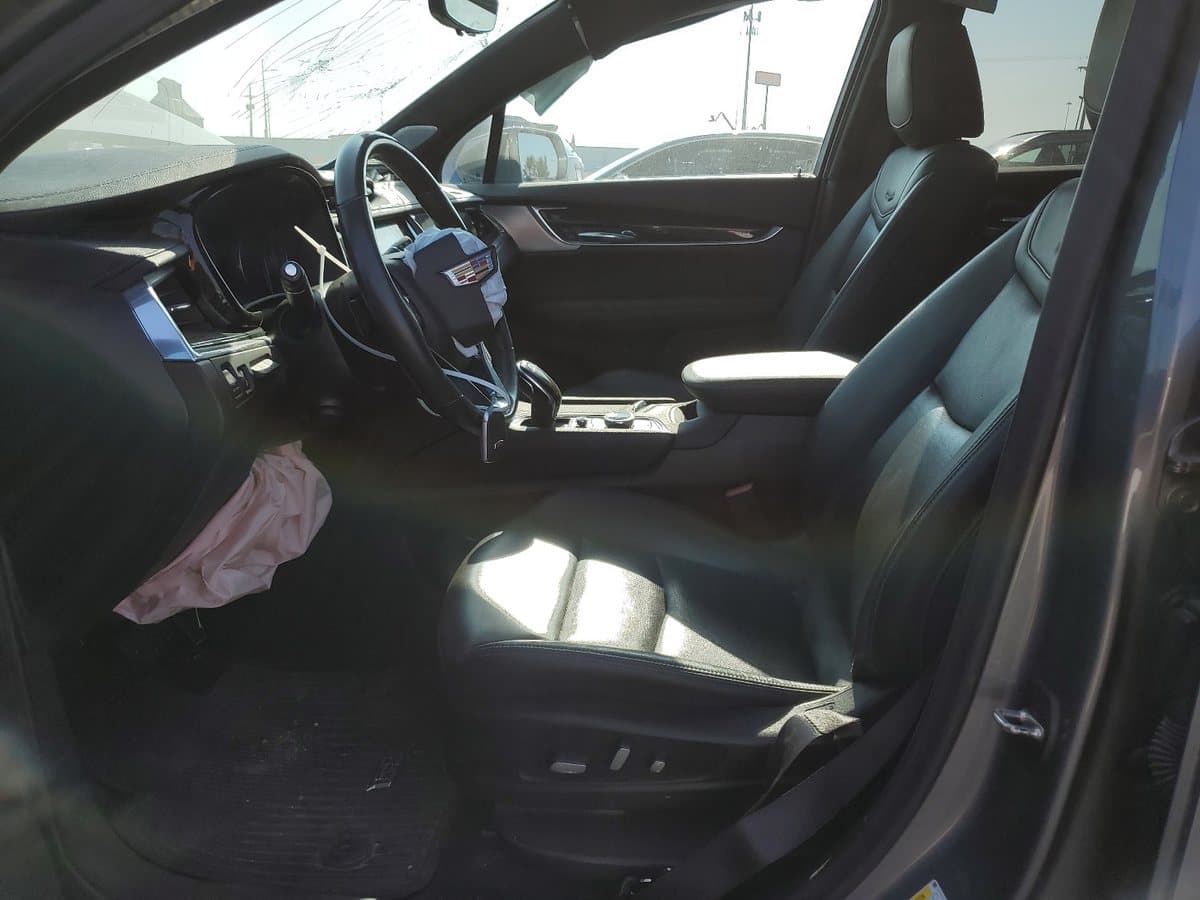
- Airbag clues. The airbag light should come on at start and then go off. A steering wheel or dash panel that looks newer than the rest of the interior, or a seatbelt that doesn't retract, can mean the airbags went off. Like the XT6 below.
- The car pulls or the wheel is off center when you drive straight on a flat road.
- Noises over bumps and doors or the trunk that need a slam to close.
What the VIN adds
The inspection tells you that something was repaired. The VIN history tells you what happened and how bad it was. In a vehicle history report, look for:
- Accident records: date, where on the car, and whether airbags deployed.
- Total loss: the insurer decided repair wasn't worth it. That's a serious crash.
- Salvage auction sale: damage code, sale price and photos of the car as it was, before the repair.
- Title brands: salvage or rebuilt in any state, even if the current title is clean.
- Odometer readings: a gap of months with no readings can be the time the car was off the road being fixed.
If you find signs of an accident
- Run the full report so you know the date, damage area and whether it was a total loss.
- Ask the seller directly and in writing whether the car was in an accident.
- Pay a body shop or mechanic for a pre-purchase inspection. Tell them what the report says so they check the frame and the airbag system.
- Price it as a repaired car. Our data on rebuilt title cars shows how much the damage type changes the value.
Questions buyers ask
How can I tell if a car was in an accident for free?
Do the walk-around below: panel gaps, paint, bolts, glass dates, lights and tires. Then run the VIN through a free check, which shows whether accident, salvage auction or total loss records exist. If anything shows up, the full report gives you the dates, damage area and auction photos.
Does every accident show up on a vehicle history report?
No. An accident shows up when someone reports it: police, an insurer, a body shop or a salvage auction. A small crash paid in cash and fixed at an independent shop may leave no record. That's why the physical inspection matters even when the report is clean.
Where are cars most often damaged?
In the front. In VinItel's records of 7.57 million salvage auction sales from 2020 to January 2025, 51.0% had front end as the primary damage, 13.7% rear end and 12.8% side. Front damage is also the most expensive to repair well, because the radiator, airbags, sensors and frame rails sit there.
Is a car with an accident on its record a bad buy?
Not automatically. A rear bumper repair is a different car from one with deployed airbags and frame damage. Read where the damage was, whether airbags deployed, whether the car was a total loss and whether it went through a salvage auction. Price the car to match and have a body shop look at the repair.
Related: how to check if a car was flooded and 10 real cars that hid their past.
- #accident history
- #frame damage
- #airbags
- #VIN check
- #salvage auction
- #body work
- #used car inspection
- #total loss