How to Check if a Car Has a Lien Before You Buy It
A lien means a lender still has a claim on the car, and that claim doesn't go away when you pay the seller. Here's how to check, and how to buy a financed car safely.
Most cars are bought with a loan, and until it's paid off the lender is listed on the title as the lienholder. That's normal. The problem starts when a car is sold before the loan is paid and nobody tells the buyer. The lender still owns a piece of the car, and it can take the car back from whoever has it.
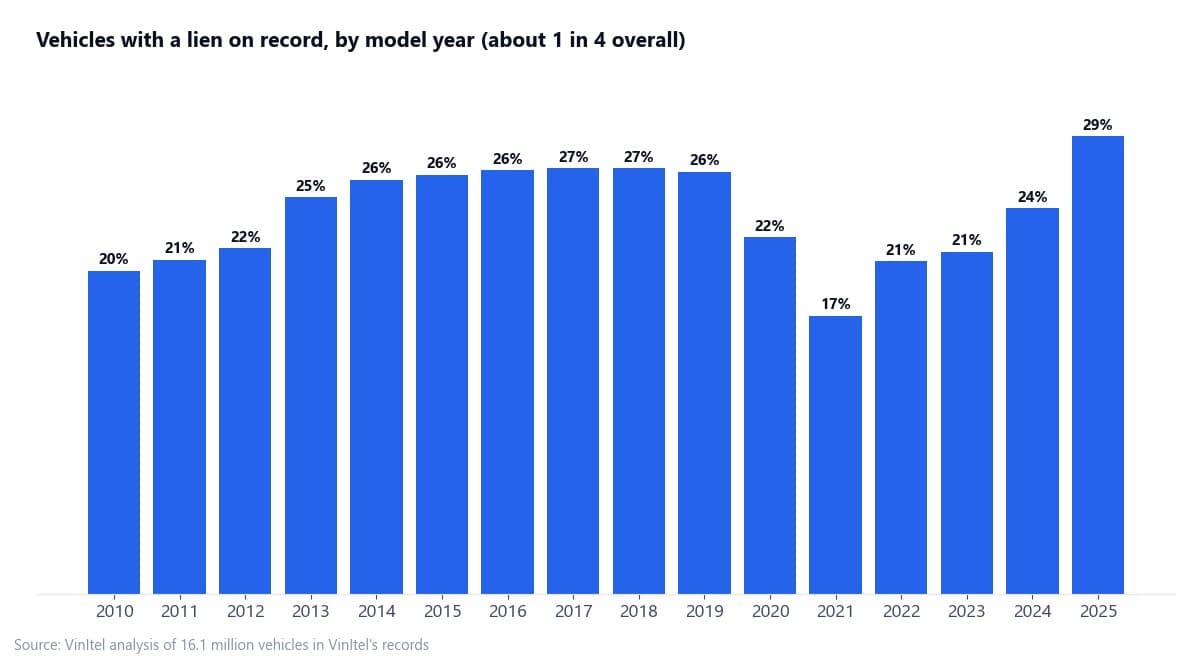
In VinItel's records on 16.1 million vehicles, 22.5% have had a lien reported: about 1 in 4. For cars from 2013 to 2019, the years most used-car buyers shop, it's closer to 26%.
What a lien means for you
- The lender can repossess the car, even from a buyer who paid in full, if the loan goes unpaid.
- You may not get a title. Without a lien release, many states won't issue a clean title in your name.
- Your money goes to the wrong place. If you pay the seller and the seller doesn't pay off the loan, you're the one stuck with the problem.
How to check for a lien in five minutes
- Ask to see the title, not a photo of it. A lienholder's name on the front means there's (or was) a loan. A seller who says "the bank has the title" is telling you the loan isn't paid.
- Run the VIN. A history report shows whether a lien was reported in the car's title records, and in which state.
- Ask for the lien release. If a lien was ever recorded, the seller should have a release letter or a title showing it was released.
- Check with the state. Several DMVs let you look up title status by VIN.
- Call the lender if a lien is open. Ask for the payoff amount and how they handle a sale.
How to buy a car that still has a loan
Plenty of private sales involve a car with an open loan. Done right, it's routine:
- Get the exact payoff amount from the lender, in writing.
- Meet at the seller's bank or credit union and pay the lender directly; any amount over the payoff goes to the seller.
- Get a signed bill of sale and the lender's release, or the lender's written promise to send the title to you.
- Don't hand over the full price in cash to the seller and wait for a title.
Liens that aren't car loans
A repair shop that wasn't paid, a storage yard or a towing company can also put a lien on a car in many states. These "mechanic's liens" can lead to a lien sale and a new title, so a car sold that way deserves a closer look at its title history. Check for title brands that went missing while you're there.
Questions buyers ask
How do I check if a car has a lien?
Look at the title: a lienholder is usually printed on it. Run a VIN check for liens reported in the car's title history. Ask the seller for a lien release letter from the lender if the car was ever financed. Some state DMVs also offer a title or lien lookup by VIN.
What happens if I buy a car with a lien on it?
The lender's claim stays with the car, not the seller. If the seller stops paying, the lender can repossess the car from you, and you'd have to go after the seller to get your money back. You may also be unable to title or register the car in your name until the lien is released.
Can I buy a car that still has a loan on it?
Yes, safely, if the loan is paid off as part of the sale. The usual way is to meet at the seller's bank or credit union and pay the lender directly, or pay through the lender's payoff process. Don't hand the full price to the seller and hope they pay the loan.
What is a lien release?
A letter or form from the lender saying the loan is paid in full and the lender gives up its claim on the car. Many states also note the release on the title itself. You need it to get a clean title in your name.
Does a lien show on a VIN report?
Often, yes: when a title is issued with a lienholder, that's part of the title record, and a VIN history report can show that a lien was reported. A report can't always tell whether the loan has since been paid, so for a car with a lien on record, ask for the release.
About the numbers
Shares come from 16.1 million vehicles in VinItel's records, counting vehicles with a lien reported in their title history. A lien on record means a lender was listed at some point, not that a loan is open today. States record lienholders differently, so this is a floor, not an exact count. Laws on liens and title transfers vary by state; check your state's DMV. More: how to check for odometer rollback and the used car buying checklist.
- #lien check
- #car lien
- #lien release
- #private car sale
- #title check
- #VIN check
- #repossession