What Is Title Washing? Three Salvage Cars That Came Back Clean
A salvage brand is supposed to follow a car for life. Three real VINs show how a car can lose it in weeks, and the one check that still catches it.
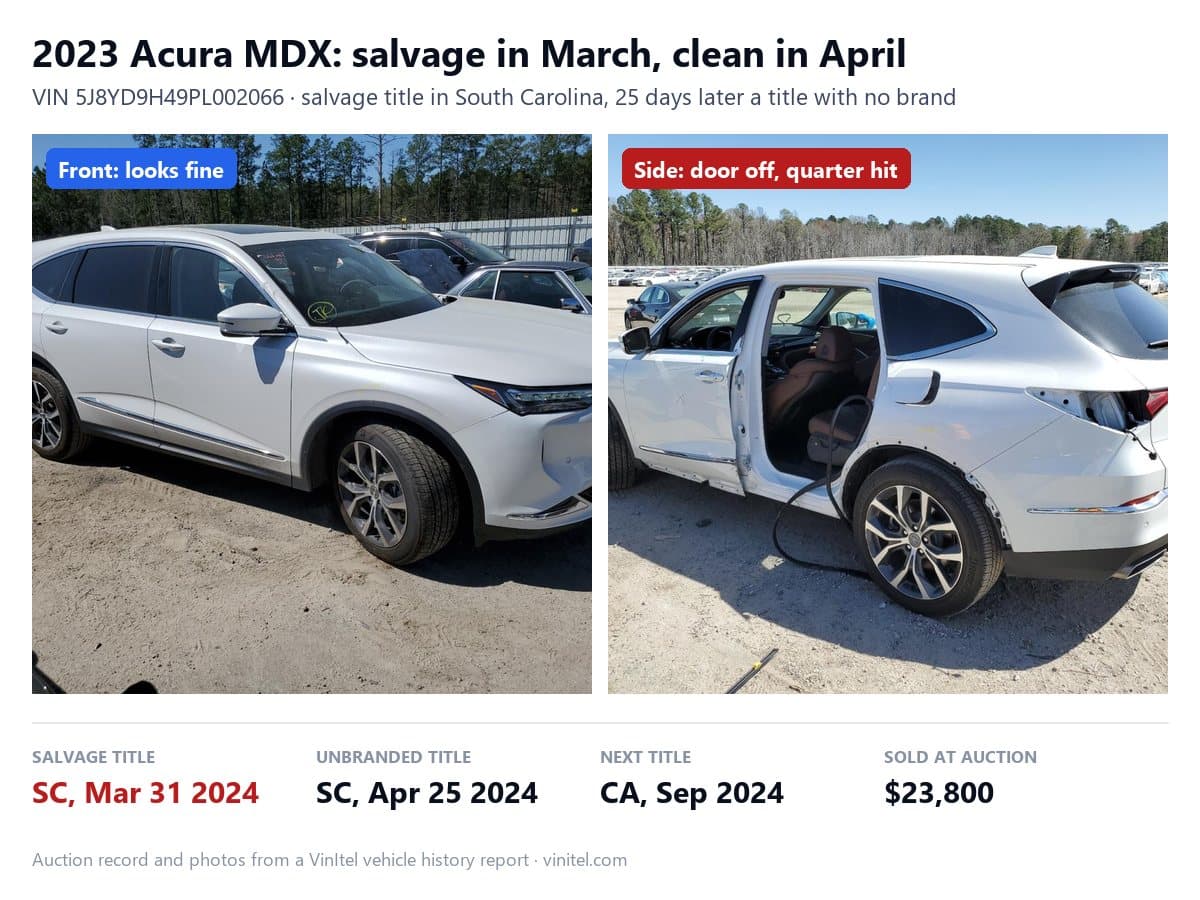
On March 31, 2024, the 2023 Acura MDX below got a salvage title in South Carolina. Twenty-five days later, on April 25, the same VIN got a new South Carolina title. The brand field on that record is empty. In May the car sold at a Copart salvage auction in North Charleston for $23,800, with a recorded retail value of $48,975. In September it was titled in California, again with no brand on the record.
Anyone who only looked at the newest title would see a clean, two-year-old MDX. That gap between the car's history and its paperwork is what people mean by title washing.
How a salvage brand disappears
When an insurer writes a car off, the state brands its title: salvage, flood, junk or non-repairable. The brand is meant to follow the car through every sale. It doesn't always, because each state issues its own titles and the rules for carrying a brand over differ.
- A new state, a new title. The car is registered in a state that issues a title from the old paperwork. If the brand doesn't make it across, the new title is clean.
- A brand that's dropped on reissue. Sometimes the next title in the same state simply comes out without the brand, as it did with the MDX.
- A repair that skips the inspection. A repaired salvage car should get a rebuilt title after an inspection. A plain clean title skips that step and the brand with it.
The car is the same. The damage, the insurance payout and the auction sale all still happened. Only the title in the seller's hand looks different.
Three cars, three timelines
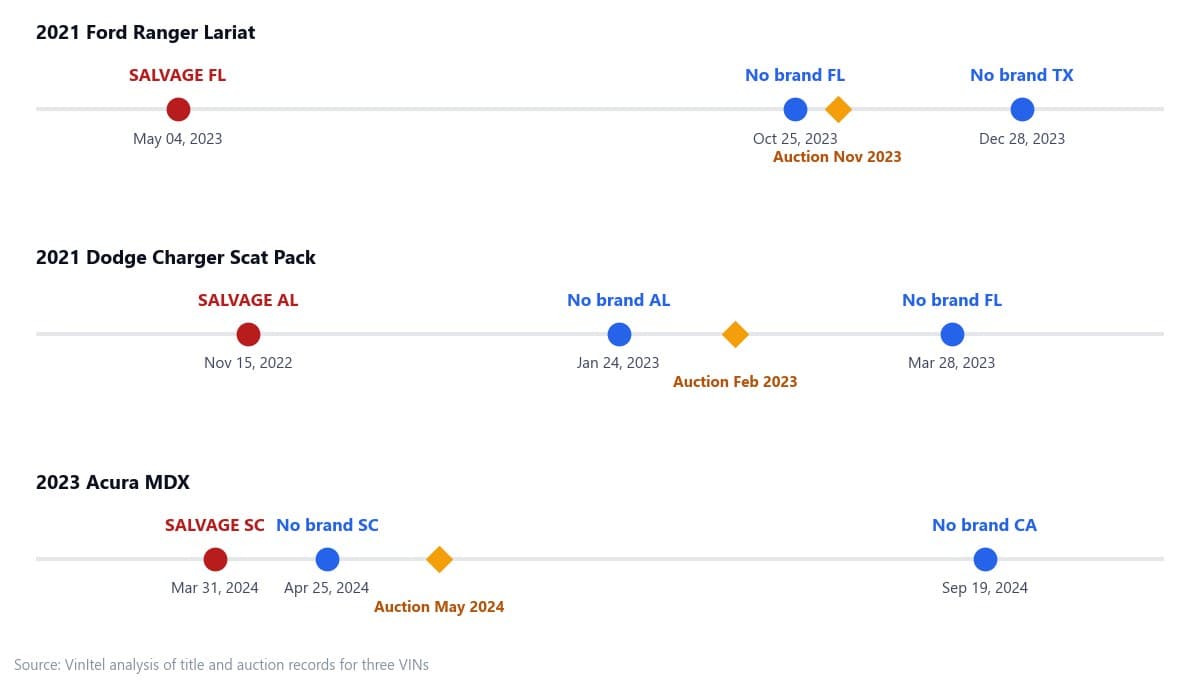
We pulled the title and auction records for three cars where a salvage brand was followed by a title with no brand. In each case the next state saw what looked like an ordinary used car.
2021 Ford Ranger Lariat · 1FTER4EH6MLD44924
Salvage title in Florida on May 4, 2023. A Florida title with no brand on October 25. Two weeks later it sold at Copart in Jacksonville for $17,100 with 19,760 miles. On December 28 it was titled in Texas, with no brand and a lien. Our records list it today with a clean title.
2021 Dodge Charger Scat Pack · 2C3CDXGJ5MH567383
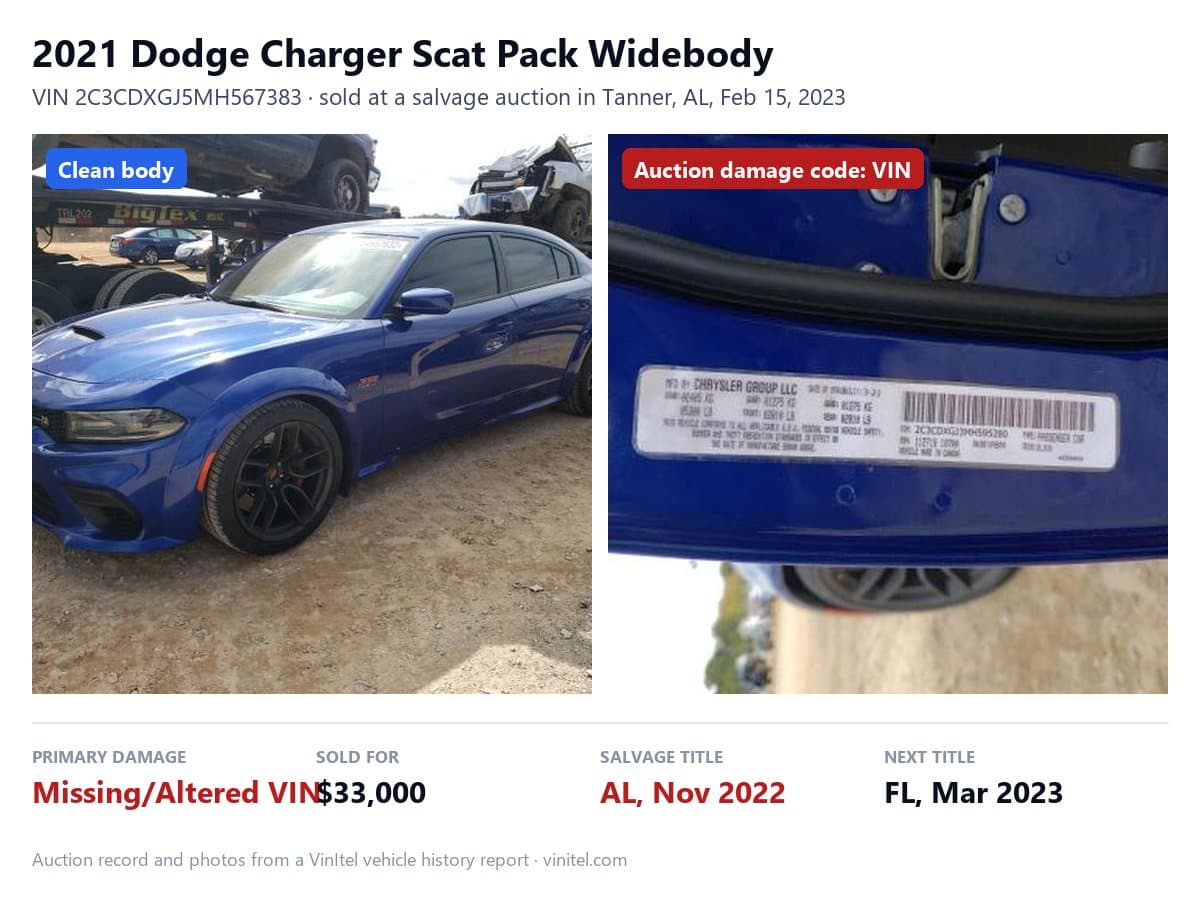
Salvage title in Alabama on November 15, 2022. An Alabama title with no brand on January 24, 2023. On February 15 it sold at Copart in Tanner, Alabama, for $33,000. The primary damage on the auction record wasn't a crash: it was "Missing/Altered VIN", a code auctions use for cars recovered with VIN problems. By March 28 it had a Florida title with no brand.
2023 Acura MDX · 5J8YD9H49PL002066
The fastest of the three: salvage on March 31, 2024, no brand on April 25, auction in May, California in September. The auction photos show the left rear door off and the quarter panel and tail light damaged, on a car that looks perfect from the front.
How to catch a washed title
- Read the title history in order. A VIN report lists every title the car got, with the state and date. Look for any brand, then ask what happened to it.
- Check for salvage auction sales. A sale at a salvage auction means an insurer or a dealer sent the car there for a reason. The damage code and the auction photos show it.
- Watch for fast state changes. Two or three states in a year, right after a salvage title, is the classic route.
- Ask for the rebuild paperwork. A properly repaired salvage car has an inspection record and usually a rebuilt brand. No paperwork is an answer too.
- Price it as what it is. Salvage cars sold at auction for about 23% of retail in our data. A washed car sold at a clean-car price is where buyers lose money.
Our free VIN check tells you if brand, salvage auction or total loss records exist. The full report shows every title record in order, the auction lot, price and photos.
Questions buyers ask
What is title washing?
Title washing is when a car with a branded title, such as salvage, flood or junk, ends up with a title that no longer shows the brand. It usually happens when the car is retitled, often in another state, and the new title is issued without carrying the old brand forward. The car's past doesn't change; only the paper does.
Is title washing illegal?
Deliberately hiding a brand to sell a car is fraud in every state, and dealers in most states must disclose a branded title. But a title can also lose its brand through paperwork gaps between states, so a missing brand isn't proof that anyone lied. That's why buyers should look at the whole title history, not just the title in the seller's hand.
How do I check if a title was washed?
Run a VIN history report and read every title record in order, not just the latest one. A salvage, flood or junk brand followed by a later title with no brand, especially in a different state, is the pattern to look for. Salvage auction records and auction photos confirm what happened to the car in between.
Can a salvage title become a clean title legally?
In most states a repaired salvage car can get a rebuilt or reconstructed title after an inspection, and that title stays branded. A plain clean title after a salvage brand is not the normal path. If you see one, ask the seller for the inspection and repair paperwork.
About the records
Title dates, states and brands come from the title records on file for each VIN; auction dates, locations, prices and damage codes from the salvage auction records. "No brand" means the title record carries no brand, not that the car was inspected or repaired. More: what a salvage title means and ten more cars that buried their past.
- #title washing
- #salvage title
- #clean title
- #title history
- #VIN check
- #Copart
- #auction photos
- #used car scams